How to Tell If Your Refrigerator Water Filter is Bad And Need Replacing(7 Clear Warning Signs)
How to Tell If Your Refrigerator Water Filter Needs Replacing (7 Clear Warning Signs)
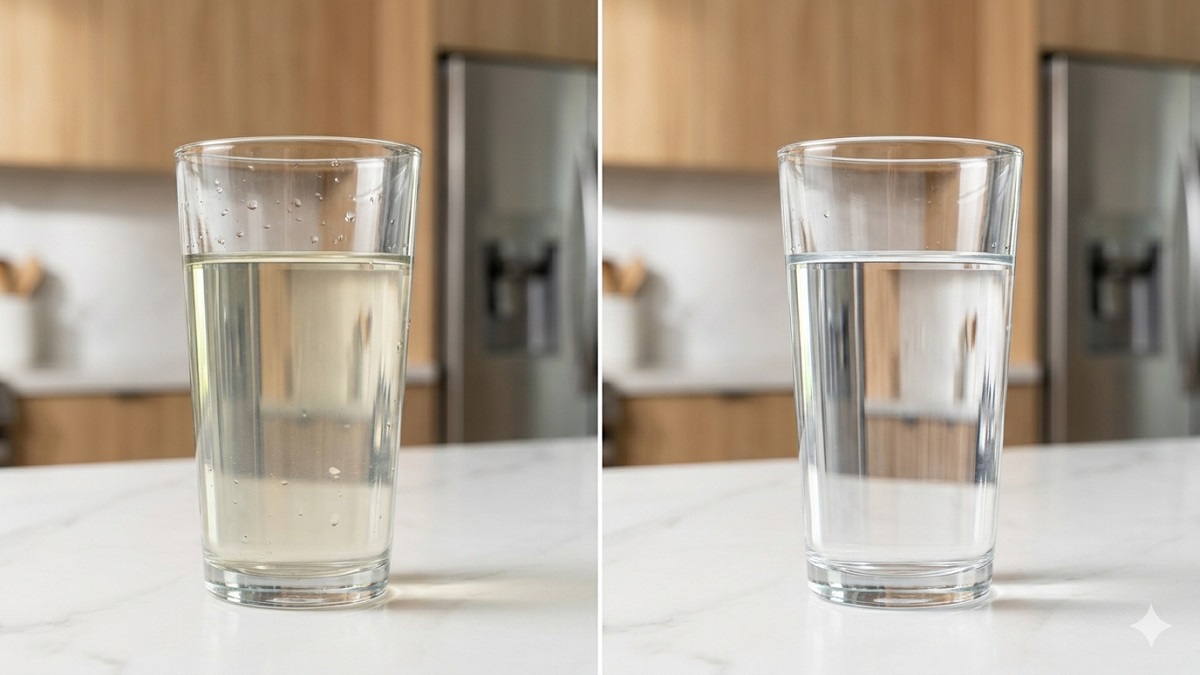
The filter warning light on your refrigerator is a timer — it counts 180 days from the last reset and turns red. But it has no ability to detect whether your filter is actually working. The real indicators of a bad or failing refrigerator water filter are in your water, your fridge’s performance, and your own senses.
Here are the 7 signs that your refrigerator water filter needs replacing — some are obvious, some are ones most people never notice until the filter has been overdue for months.
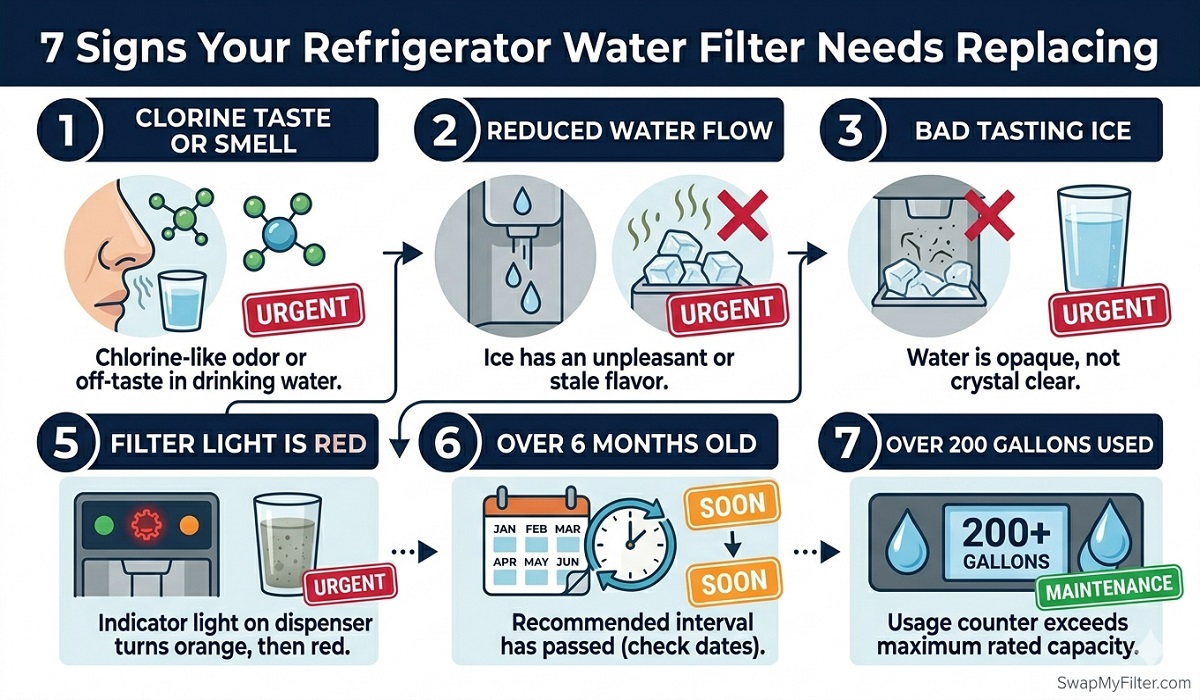
Your refrigerator water filter needs replacing if you notice: chlorine taste or smell returning, slow dispenser flow, cloudy or discoloured water, bad-smelling ice, the filter indicator turning red, it has been more than 6 months since the last replacement, or more than 200 gallons have been used.
The 7 Warning Signs Your Filter Needs Replacing
1. Chlorine Taste or Smell Returns Replace Now
When your filtered water starts tasting or smelling like tap water again — that faint chlorine or “swimming pool” edge — your activated carbon is saturated. Carbon adsorbs chlorine molecules until it is full, then chlorine passes straight through. This is the clearest sign your filter has reached capacity and is no longer protecting you.
2. Slow or Weak Water Flow From the Dispenser Replace Now
A noticeably slower trickle from the dispenser — when you know your home water pressure hasn’t changed — indicates the filter media is becoming physically clogged with sediment, minerals, and trapped particles. The flow restriction worsens as the filter approaches complete saturation. This sign often appears before you notice any taste change.
3. Ice Tastes or Smells Off Replace Now
Your ice maker draws from the same filtered water supply as the dispenser. If your ice has an odd taste, a chlorine smell, or is producing smaller cubes than normal, the filter is failing. Many people notice this sign before they notice anything wrong with the dispensed water, because ice amplifies off-tastes.
4. Water Looks Cloudy or Has Particles Replace Now
If your filtered water is cloudy, grey, or has visible particles (and you have already flushed the filter after installation), the filter media may be breaking down. This is different from the normal cloudiness immediately after installing a new filter — that clears within a few minutes of flushing. Persistent cloudiness from an older filter is a serious sign.
5. The Filter Indicator Light Is Red or Orange Replace Soon
The indicator light is a 180-day timer — when it turns red, 6 months have elapsed since the last reset. While it is not a true filter quality sensor, a red light means you are at or past the recommended replacement point. Do not dismiss it or reset it without replacing the filter.
6. It Has Been More Than 6 Months Replace Soon
Even if your water still tastes fine, 6 months is the maximum recommended service interval for virtually every refrigerator filter on the market. A saturated carbon filter that still tastes “okay” may still be failing to reduce lead, cysts, or VOCs — contaminants that have no taste. Time is a valid and important trigger for replacement.
7. You Have Used More Than 200 Gallons Monitor Closely
If your household uses the dispenser heavily — large family, cooking with filtered water, heavy ice maker use — you may reach the 200-gallon capacity limit before the 6-month mark. Use the formula: Days to 200 gallons = 200 ÷ (people × gallons per day). A family of 5 using 0.75 gallons per person per day reaches 200 gallons in about 53 days. For the full calculator: How Often Should You Really Change Your Refrigerator Water Filter?
What Happens If You Don’t Replace an Expired Filter?
Leaving a refrigerator water filter past its rated capacity does not just mean reduced filtration — it can actively make your water worse over time:
| Time Past Due | What Is Happening | Risk Level |
|---|---|---|
| 1–2 months | Carbon approaching saturation. Chlorine reduction declining. Taste may begin changing. | Low — partial filtration |
| 3–4 months | Carbon substantially saturated. Lead and cyst reduction significantly reduced. | Moderate — meaningful protection loss |
| 6+ months | Fully saturated carbon. Possible back-flushing of trapped contaminants. Bacterial growth risk on saturated media. | High — replace immediately |
| 12+ months | Filter media degrading. Risk of releasing previously captured contaminants. | Very High — replace immediately |
According to the CDC’s guidance on home water treatment, filters that are not replaced on schedule can harbour bacterial growth in the saturated carbon media. This risk increases significantly beyond 12 months of continuous use.
How to Test Your Water If You Suspect a Failing Filter
The most objective way to assess whether your filter is still working is to test your water. Options:
- Home water test kit: Inexpensive strips available online and at hardware stores test for chlorine, lead, pH, hardness, and bacteria. Run a baseline tap water test, then a filtered water test. If the results are similar, your filter is not reducing contaminants effectively.
- Local Consumer Confidence Report: Your water utility publishes an annual CCR detailing every detected contaminant in your supply. Check it free at EPA.gov/ccr. This tells you which contaminants your filter should be reducing and at what baseline levels.
- Professional water test: For comprehensive peace of mind — particularly for lead, PFAS, or nitrates — a certified laboratory water test is the most reliable option. Your local health department can often recommend accredited labs in your area.
No standard refrigerator filter indicator light has the ability to test water quality or carbon saturation. Every major refrigerator brand — LG, Samsung, Whirlpool, GE, Kenmore — uses a countdown timer as the filter indicator. A green light does not mean your filter is working. A red light does not mean it just failed. The timer is a rough approximation, not a quality sensor. Your senses and this checklist are more reliable than the light.
Time to replace? Find your filter in seconds.
Enter your refrigerator model number for a guaranteed NSF-certified match with same-day shipping.
Find My Replacement Filter →Frequently Asked Questions
Ready to Replace Your Filter?
Find your exact NSF-certified replacement in seconds. Same-day shipping before 2 PM EST. Guaranteed to fit or we make it right.
🔍 Find My Filter Now