NSF Certified Refrigerator Water Filters: Why It Matters and How to Verify in 2 Minutes
NSF Certified Refrigerator Water Filters: Why It Matters and How to Verify in 2 Minutes
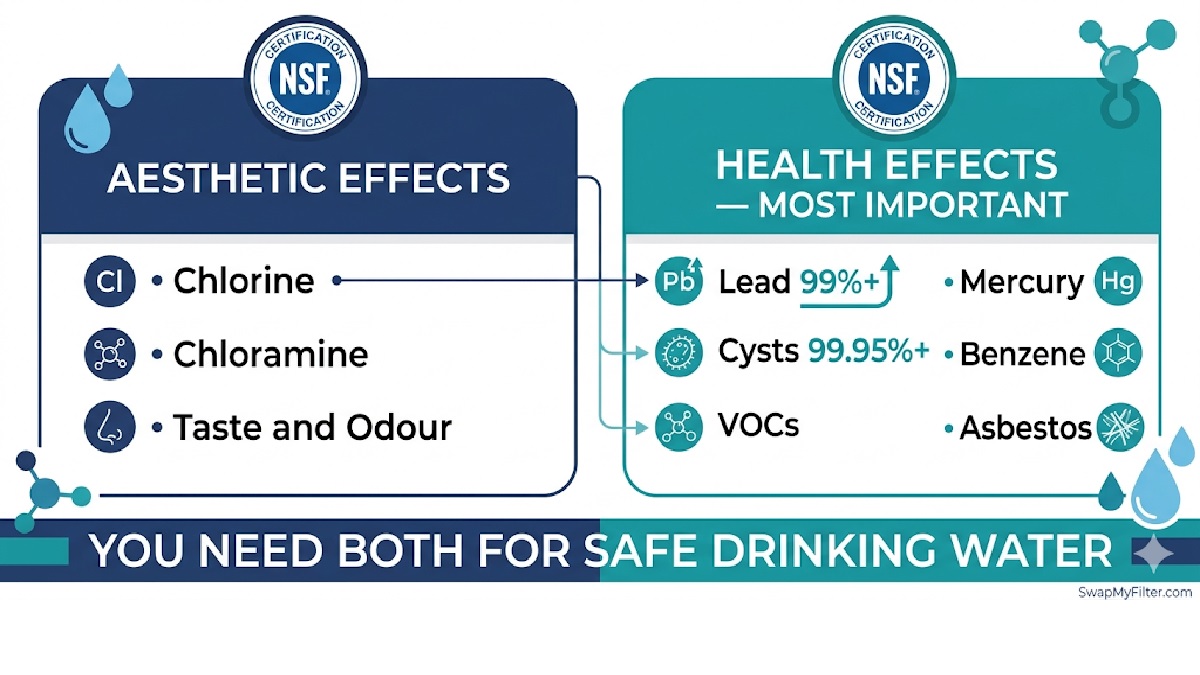
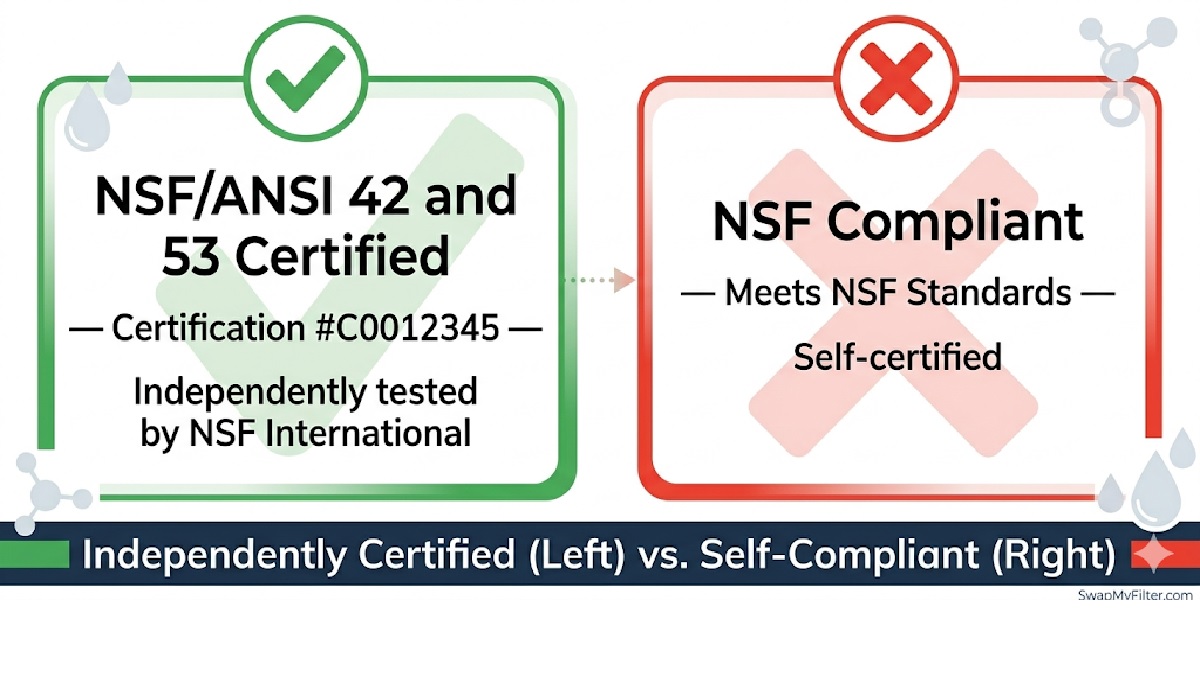
When you are buying a refrigerator water filter — especially a compatible alternative — the most important words you can see are NSF/ANSI 42 and 53 certified. Not “NSF compliant.” Not “meets NSF standards.” Certified.
The difference is enormous, and millions of consumers do not know it. This guide explains what NSF certification is, what NSF 42 versus NSF 53 means, and how to verify any filter yourself in under two minutes.
NSF certification is independently tested and verified. “NSF compliant” is a manufacturer’s self-claim. Only buy filters with a verifiable NSF certification number — not just a logo on the packaging.
What Is NSF International?
NSF International is an independent, non-profit, non-governmental organisation founded in 1944 at the University of Michigan. It develops public health standards and provides third-party certification for products including water filters, food equipment, and dietary supplements.
When a water filter carries NSF certification, it means NSF tested actual production samples in their own laboratories against defined performance standards — and the filter passed. The certification requires ongoing audits and re-testing to maintain. It is not self-issued. It cannot be purchased. It is awarded based on actual lab performance data.
NSF 42 vs NSF 53 — What Each Means
NSF/ANSI Standard 42
“Aesthetic Effects”- Reduces chlorine — the primary disinfectant causing “pool” taste
- Reduces chloramine
- Reduces taste and odour compounds
- Verified chlorine reduction: greater than 97%
- Does NOT cover health-affecting contaminants
NSF/ANSI Standard 53 ⭐
“Health Effects — Most Important”- Reduces lead — greater than 99% verified
- Reduces cysts (Cryptosporidium, Giardia) — greater than 99.95%
- Reduces VOCs — benzene, toluene, pesticides
- Reduces mercury, asbestos, turbidity
- The critical safety certification for drinking water
NSF 42 makes your water taste better. NSF 53 makes your water safer. A filter with only NSF 42 provides no verified protection against lead or cysts. For any drinking water filter: NSF/ANSI 42 and 53 together is the baseline requirement.
The 2-Minute NSF Verification Challenge
Open a second tab right now. In under 2 minutes, you will know whether any filter is genuinely certified or just claims to be. Follow these steps exactly:
Have the Filter Brand or Model Ready
Get the product listing, filter packaging, or filter label in front of you. You need either the brand name or the specific model number.
Open the NSF Certified Products Database
In your second tab, go to: info.nsf.org/Certified/DWTU/ — NSF International’s official, free, publicly searchable database of all certified drinking water treatment units.
Search by Brand Name
Type the filter brand in the Company Name field and click Search. If the brand is genuinely NSF certified, their products appear with the specific standards listed (42, 53, etc.). If nothing appears — that brand’s certification claim is false.
Look for BOTH Standard 42 and Standard 53
In the results, the Standard column shows which certifications each product holds. You need to see both Standard 42 and Standard 53 listed. Standard 42 alone is insufficient. No results = the “NSF certified” claim on the packaging is false.
Note the Certification Number
NSF-certified products have a unique certification number in the database. This is your final verification that the certification is genuine and not a copied logo from a competing product.
✅ Challenge Complete
Found the filter with both NSF 42 and NSF 53 listed and the certification number matches? You are buying a verified, safe filter. Brand does not appear, or only NSF 42 listed? Walk away and find a certified alternative.
NSF Certified vs “NSF Compliant” — A Critical Distinction
| Claim on Packaging | What It Means | Independent Verification? | Trust It? |
|---|---|---|---|
| NSF/ANSI 42 and 53 Certified | Tested by NSF International’s lab against defined standards | Yes — verifiable at nsf.org | ✅ Yes |
| “NSF Compliant” | Manufacturer’s self-claim that their filter meets NSF standards | No — self-issued | ⚠️ No |
| “Meets NSF Standards” | Same as “NSF Compliant” — manufacturer’s claim only | No | ⚠️ No |
| “NSF-Style Testing” | Manufacturer ran their own internal tests using NSF methodology | No — not audited by NSF | ⚠️ No |
| WQA Gold Seal Certified | Certified by the Water Quality Association — separate but credible certification body | Yes — verifiable at wqa.org | ✅ Yes |
Frequently Asked Questions
Shop NSF-Certified Filters — Every Brand
Every filter at SwapMyFilter carries verified NSF/ANSI 42 and 53 certification. We never stock uncertified products — your family’s safety is non-negotiable.
🏅 Shop NSF Certified Filters