Refrigerator Water Filter Leaking: 7 Causes and Exact Fixes (All Brands)
Refrigerator Water Filter Leaking: 7 Causes and Exact Fixes (All Brands)
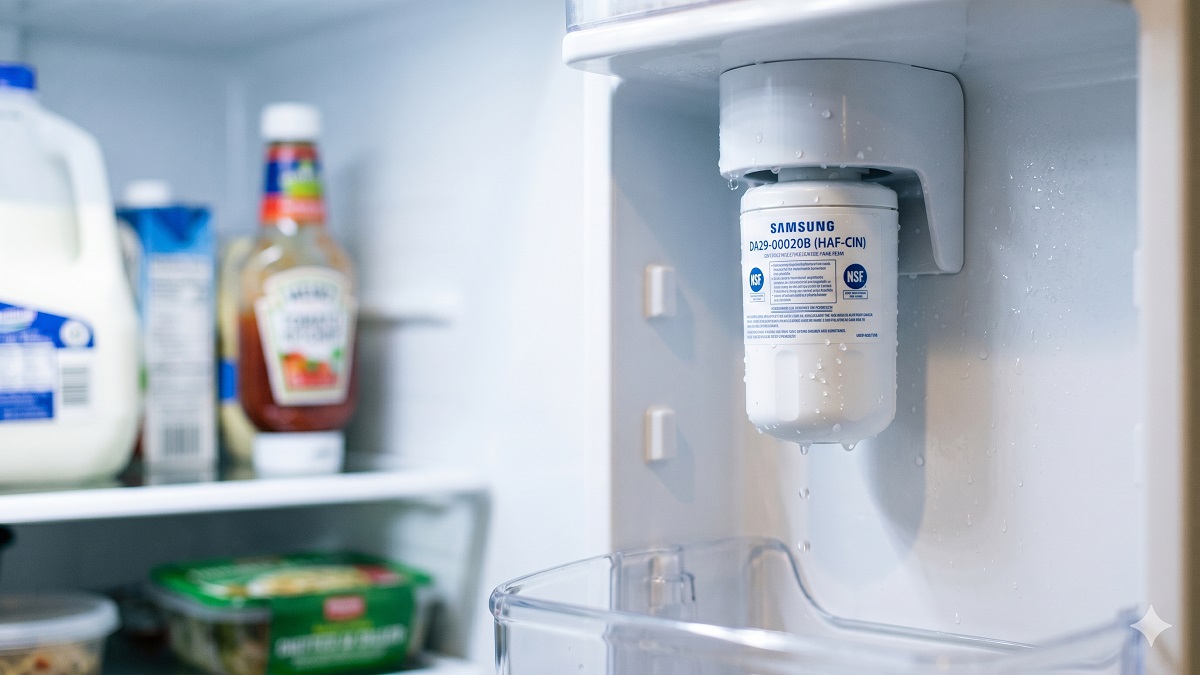
A leaking refrigerator water filter is almost always fixable in under 5 minutes without any tools. The vast majority of filter leaks — across every brand and filter generation — trace back to one of seven root causes, the most common by far being the forgotten protective cap that comes on every new filter.
This guide walks through every cause in order of likelihood, with the exact fix for each one.
If water is actively dripping: turn off the ice maker immediately, place a towel under the housing, and either remove the filter or tighten it into its locked position. Do not leave the fridge running with an active drip — water pooling inside the appliance can damage the interior liner and flooring below.
The 7 Causes of a Leaking Refrigerator Water Filter — and Exact Fixes
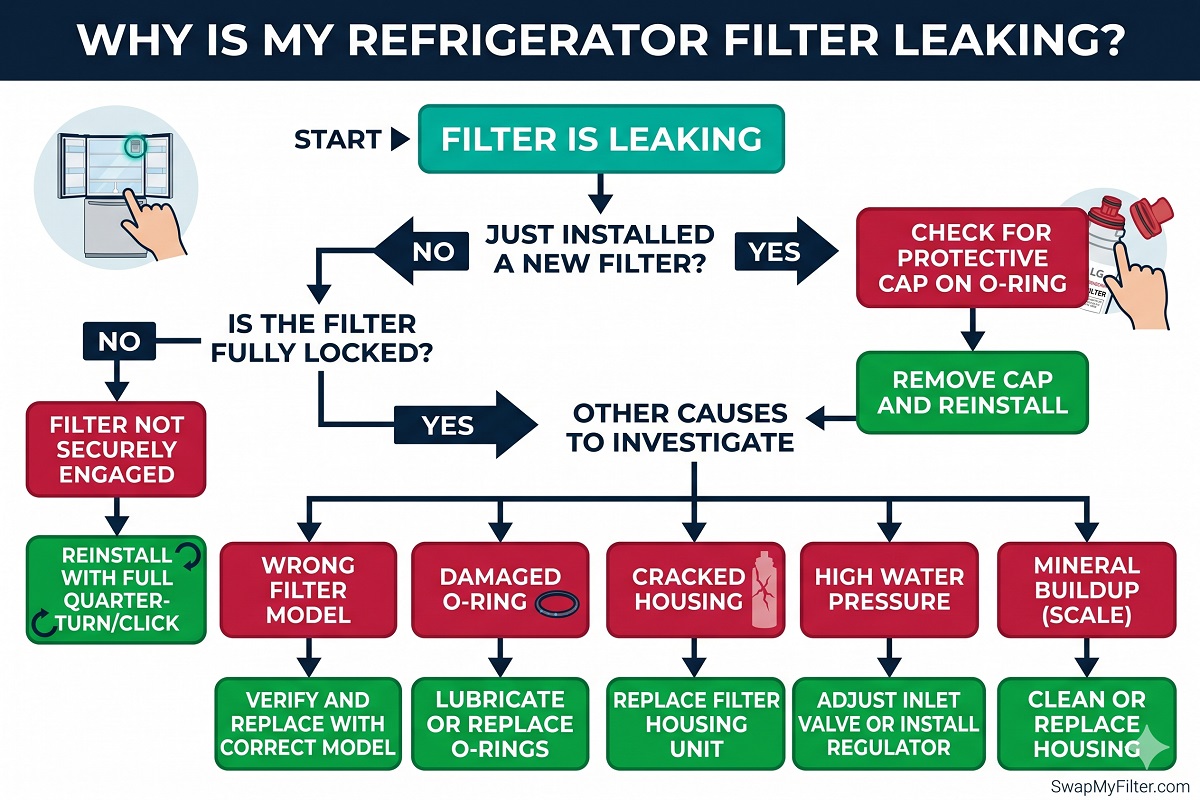
Protective O-Ring Cap Left On the New Filter
Every new filter ships with a plastic protective cap covering the O-ring end. This cap must be removed before insertion. Leaving it on means the O-ring cannot seat against the housing seal — water leaks around the contact point. This is the cause of approximately 60% of all post-installation filter leaks.
Remove the filter. Locate and remove the protective plastic cap from the O-ring end (it may be blue, red, or clear). Reinstall the filter and lock it into position.
Filter Not Fully Seated / Locked
A filter that appears to be installed but has not completed its full quarter-turn (twist-type) or full push-click (push-type) will not seal. The filter may feel “in” but the internal valve will not open fully and the O-ring will not compress against the housing seat. Water drips from around the filter body.
Remove the filter completely and reinsert. For twist-type: push in firmly then rotate clockwise until you feel a solid mechanical stop — not just resistance, but a definitive stop. For push-type: push straight in until you hear and feel a firm click with no play.
Wrong Filter Model for Your Refrigerator
A filter from the wrong brand, wrong generation, or wrong model variant may physically seat but will not seal correctly because the O-ring diameter, thread pitch, or body taper doesn’t match the housing. The filter may even lock partway in and leak continuously.
Confirm your filter model using the label on your old filter or our Filter Compatibility Checker. Common mix-ups: LG LT700P vs LT1000P, Samsung DA29-00020B vs DA97-17376B, Whirlpool Filter 1 vs Filter 3. Replace with the correct model.
Damaged or Worn O-Ring on the Filter
The O-ring is the rubber seal that creates a watertight joint between the filter and housing. If the O-ring on the new filter is cracked, pinched during installation, or seated incorrectly in its groove, it will not seal. This is less common with new filters but can happen if the filter was stored improperly or shipped in extreme temperatures.
Remove the filter and visually inspect the O-ring. If cracked or deformed, the filter unit is defective — contact us for a replacement under our Guaranteed Fit Promise. If the O-ring is intact but displaced, reseat it in its groove and lubricate lightly with food-grade silicone grease before reinstalling.
Cracked or Damaged Filter Housing
The plastic housing inside the refrigerator that accepts the filter can crack from impact (being hit by a falling item inside the fridge) or from over-tightening an old stuck filter during removal. A cracked housing will leak regardless of how correctly the new filter is installed.
Remove the filter and inspect the housing with a torch. Look for cracks around the rim or along the housing body. A cracked housing typically requires a service call or replacement of the housing assembly — contact your refrigerator manufacturer’s service line or a local appliance repair technician.
High Home Water Pressure Overloading the Seal
Most refrigerator water systems are rated for 20–120 PSI. Homes with water pressure above 120 PSI can force water past even correctly installed filter O-rings. This typically produces a slow weep rather than an active drip, and often worsens when water is flowing through the system.
Test your home water pressure at the supply valve behind the refrigerator using an inexpensive pressure gauge. If above 80 PSI, install a pressure reducing valve (PRV) on the refrigerator supply line. PRVs are available at hardware stores for under $20 and are straightforward to install on the supply line.
Mineral Buildup on Housing Seat
In hard water areas, calcium and mineral deposits can build up on the filter housing seat over months of use. When the new filter’s O-ring contacts this rough mineral layer instead of a smooth housing seat, it cannot seal completely.
Remove the filter. Dampen a cloth with white vinegar and clean the inside of the housing seat area — the rim where the O-ring makes contact. Allow to dry completely. Reinstall the new filter. The vinegar dissolves calcium deposits and restores the smooth sealing surface.
Brand-Specific Leak Notes
| Brand | Most Common Leak Cause | Brand-Specific Note |
|---|---|---|
| LG (LT1000P / LT700P) | Protective cap left on | Cap is often red or blue — easy to miss inside the housing |
| Samsung (DA29-00020B) | Filter not fully clicked in | Requires firm straight-in push — partial insertion feels “in” but isn’t |
| Whirlpool (W10295370A) | Wrong filter generation | Filter 1 and Filter 3 look identical — wrong model won’t seal |
| GE (RPWFE / XWFE) | Housing mineral build-up | GE models in hard water areas benefit from quarterly housing cleaning |
| Frigidaire / Kenmore | Filter not fully seated | Push-type filters need a firm two-stage push — partial seat is common |
| Maytag (UKF8001) | Damaged O-ring | UKF8001 O-ring groove is narrower — inspect carefully before installing |
When to Call a Technician
Attempt all the fixes above before calling a technician. However, call a professional if you find:
- A visibly cracked filter housing that you cannot replace yourself
- Leaking continues after confirming the correct filter is correctly installed with the cap removed
- Water is leaking from behind the refrigerator rather than from the interior filter housing — this suggests a supply line or water valve issue, not a filter issue
- You hear water running continuously even when the dispenser is not in use — this indicates a faulty water inlet valve
If a filter purchased from SwapMyFilter leaks and the cause is confirmed to be a defective filter (cracked body, damaged O-ring, manufacturing defect), our Guaranteed Fit Promise covers a free replacement. Contact our support team with your order number and a photo of the leak.
Frequently Asked Questions
Need a Replacement Filter?
Find your exact NSF-certified replacement. Guaranteed to fit. Same-day shipping. Our Guaranteed Fit Promise covers every order.
🔍 Find My Filter Now